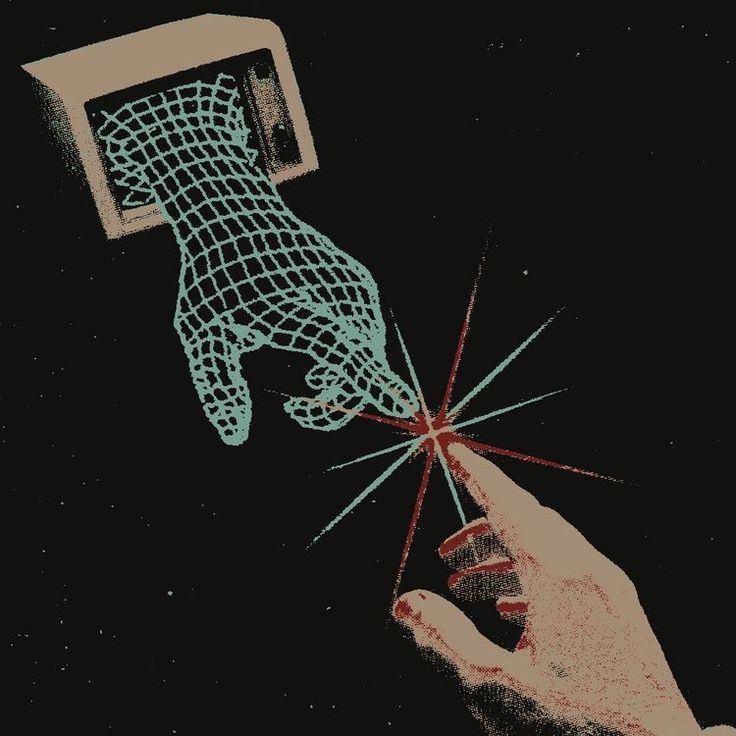
Data—even if it stems from qualitative methodologies and mappings of tacit knowledge—is always codified, which is a form of knowledge that is rational, systematized, and calculable (Huws, 2019). What the advancement of data has done that is most integral in monopoly capitalism is that all non-sleeping time of an individual/population is work time (Smythe, 1977). The modern context of data technology advancing allows for the comprehensive mapping of all life but sleep (in fact, it’s generated an interest both from a corporation and consumer side to map our sleep as well), even if the data may be unreliable, representing a false reality through quantitative means.
Just to clarify, the following uses the term digital labor to refer to the production of content/data by users on digital platforms, not necessarily the exploitative practices that go into producing the technology itself. Now, with an understanding of the audience as a commodity, the main product of any media relationship between consumer and producer, it is well-regarded nowadays that our own digital labor on social media/entertainment platforms is a form of work, albeit an uncompensated one. What is interesting here is to consider the following Marx excerpt:
“in order to oppose their workers, the employers either bring in workers from abroad or else transfer manufacture to countries where there is a cheap labour force.”
This same process of outsourced labor happens on the digital scale, where the majority of social media/digital companies are owned and operated out of the West, with an imperialist-globalist disseminated domination. In the chase for further acquisitions of users and capital, digital media moves not to replace, but to overwhelm its already uncompensated Western laborers with the rest of the world. Capitalism follows the same path regardless if it is real or digital (faux-dichotomy), once it has become mass-adopted and seeped into all the spheres in its current location, it’ll seek further expansion to continue extracting value out of ever-tightening labor value.
The point is that in enough time, social media will lose its Western context in all but its origin. Language is evolving in this global homogeneous context of digital media, even if in its current context it is still intrinsically tied to Western (and really, American) spheres of culture as topics/worldviews of discussion. Textual culture gives way to a visual one, and global homogeneity can only be achieved through the shared sensorial perceptions of visual and auditory stimuli. Not words, but sounds. Companies like Facebook, Google, and Baidu (and really all of them) have been engaging in imperialist practices of spreading their product worldwide to establish a decentralized network. From a purely quantitative aspect, American hegemony in terms of the population of users will give way to the high population centers of areas like the global south (especially countries like India, less so China). The near future will be marked by advancing towards a truly diverse space online, while still homogenizing in its affect. This is not a good thing.
Functioning alongside that is algorithmic curation. The advancements of algorithmic technology in curating feeds for consumption, can be understood as a way of avoiding the mess of interacting with a media sphere that is too schizophrenic, global, and incomprehensible to individuals. The world in the palm of your hand can’t be shown to you in its total depth; information overloads incite fear and negative factors that push away from consumption. It has to be you through the world; Narcissus’s mirror aids you through an information context curated for you. The curation of an algorithm is a curation of you, this is essential in understanding possible proposals for the cause of the exploitation of digital labor.
“It is this continuous embrace of our own technology and daily use that puts us in the narcissist role of subliminal awareness and numbness in relation to these images of ourselves. By continuously embracing technologies, we relate ourselves to them as servomechanisms. That is why we must, to use them at all, serve these objects, these extensions of ourselves, as gods are minor religions” (McLuhan, 1994, p.46)
What drives users’ production on social/digital media is this serving of the media object as gods, which are extensions of ourselves. How does one determine a wage for worship, especially one of a digital kind? The working class in the context of digital labor is a worship class. While not fully removed from any context of the physical and material, the internet functions in this disembodied cyberspace. Baudrillard (1975), in The Mirror of Production, notes that theorists (Marx) need to imagine an understanding of political economy that transcends an understanding of labor that is solely based on the human capacity to produce. It is the relationship between one’s pursuit of entertainment, and the data (capital) extracted from that process that is of focus in regard to digital labor. In life, one does not get mad at the dust mites on skin extracting surplus dead cellulite, because this process is invisible and incomprehensible in its microscopic but mass scale. The Internet’s “free lunch” is free in that regard, and data as a resource is just modernity’s most invisible exploitation, and perhaps most minuscule, at least on a personal level.
References
Baudrillard, J. (1975). The Mirror of Production. Telos Press.
Fuchs, Christian. (2016). Digital labor and imperialism. Monthly Review, 67(8), 14-24.
Huws, Ursula (2019) Labour in Contemporary Capitalism: What Next? London: Palgrave.
McLuhan, M. (1994). Understanding media: The extensions of man (1st MIT Press ed). MIT Press.
Smythe, D. (1977). Communications: Blindspot of Western Marxism. Canadian Journal of Political and Social Theory, 1(3), 1-27.
 -> Slopunk <-